Mayor column: with Cr John Harvie
Published on 31 July 2025
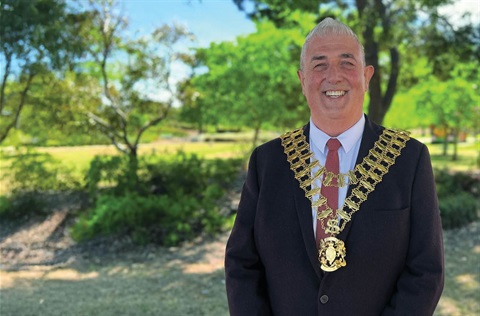
I recently appeared before the NSW government ‘Inquiry into the Impacts of the (federal) Water Amendment (Restoring Our Rivers) Act 2023 on NSW Regional Communities’, in Griffith. The terms of reference for the Inquiry included:
(a) The social, economic, and environmental impact of repealing limits to the cap on Commonwealth water purchases.
(b) The impact of Planned Environmental Water rules on the reliability of water allocations in NSW and the Commonwealth’s environmental water holdings.
(c) The effectiveness and impacts of past water reforms, including community-based water reduction adjustment programs such as the Strengthening Basin Communities program and Murray-Darling Basin Economic Development Program.
(d) Options to improve future community-based reduction adjustment programs including next rounds of the Sustainable Communities Program.
Council’s submission impressed upon the committee the importance of agriculture to our local, regional, and state economies and that it is the number one driver of the Murray River economy. Any legislative or rules-based changes that have the effect of reducing water allocations for productive industries will have devastating effects on our communities. The evidence is there for all to see following the first round of buybacks and include population, economic and social decline.
We made them aware of the fact that 83% of water purchase came from the southern basin and importantly, that agriculture and industry only have access to 28% of the total inflows of water in the Murray Darling system.
We made it clear that if the Commonwealth repeals the cap on water purchases, it will lead to more uncertainty, significant decreases in investment and would make the industry financially unviable.
It is also akin to giving mice unfettered access to the cheese store.
We asked if the government wanted irrigators to continue producing the world’s best quality food and fibre or not. The cost and availability of water, energy and other inputs are combining to make farming unviable. We also told the committee that the $300 million on offer through the Sustainable Communities Program is totally inadequate. Asked why the hardest hit communities would only receive $160 million of those funds and urged the NSW government to aggressively pursue the federal government to increase the fund to $1.5 billion and that the funds be distributed to communities which have and will continue to endure the greatest impacts of water buybacks.
Local communities should also determine how the funds are spent to achieve best outcomes. MRC’s full submission can be viewed at: www.parliament.nsw.gov.au/committees/inquiries